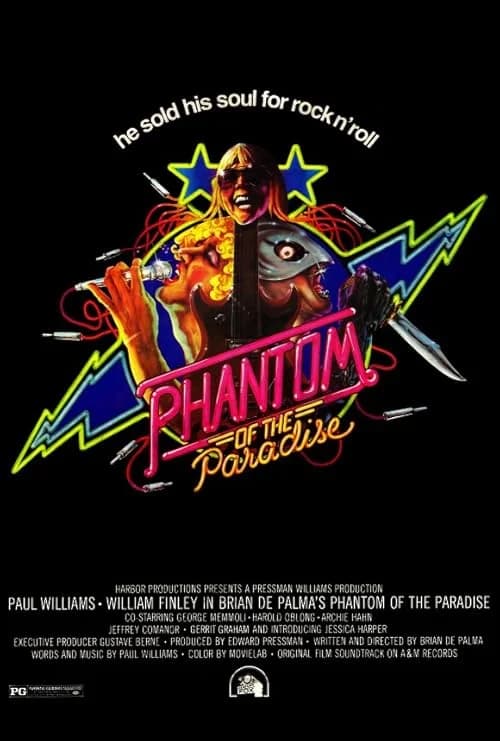
About Phantom of the Paradise
Brian De Palma's 1974 cult classic Phantom of the Paradise is a wildly inventive genre mashup that blends horror, rock opera, satire, and romance into a uniquely entertaining experience. The film follows composer Winslow Leach, whose life's work is stolen by the sinister music mogul Swan to open his decadent rock venue, The Paradise. After a horrific accident disfigures him, Winslow becomes the Phantom, haunting The Paradise to sabotage Swan's schemes while trying to protect the innocent singer Phoenix, for whom he has fallen.
Paul Williams delivers a memorable dual performance as both the villainous Swan and the film's composer, creating a soundtrack that perfectly captures the glam rock era while parodying its excesses. William Finley brings tragic pathos to the Phantom role, while Jessica Harper shines as the vulnerable Phoenix. De Palma's direction is stylish and energetic, filled with his trademark split-screens and visual flourishes that keep the film visually dynamic throughout its 91-minute runtime.
What makes Phantom of the Paradise essential viewing is its prescient satire of the music industry's exploitation of artists, which remains relevant decades later. The film's cult status has grown over time, with fans appreciating its bold creativity and emotional core beneath the campy surface. Whether you're a fan of horror, musicals, or 70s cinema, this underrated gem offers a one-of-a-kind cinematic experience that deserves to be discovered by new audiences.
Paul Williams delivers a memorable dual performance as both the villainous Swan and the film's composer, creating a soundtrack that perfectly captures the glam rock era while parodying its excesses. William Finley brings tragic pathos to the Phantom role, while Jessica Harper shines as the vulnerable Phoenix. De Palma's direction is stylish and energetic, filled with his trademark split-screens and visual flourishes that keep the film visually dynamic throughout its 91-minute runtime.
What makes Phantom of the Paradise essential viewing is its prescient satire of the music industry's exploitation of artists, which remains relevant decades later. The film's cult status has grown over time, with fans appreciating its bold creativity and emotional core beneath the campy surface. Whether you're a fan of horror, musicals, or 70s cinema, this underrated gem offers a one-of-a-kind cinematic experience that deserves to be discovered by new audiences.