About The Golem
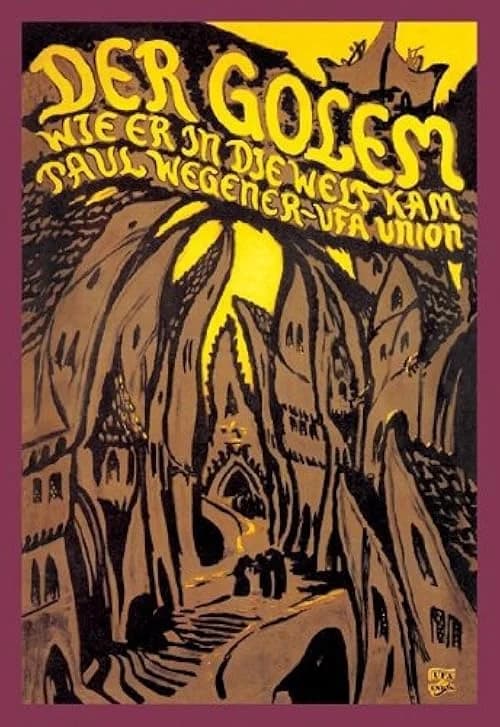
Paul Wegener's 1920 silent masterpiece 'The Golem: How He Came Into the World' stands as a landmark achievement in both horror cinema and German Expressionism. Set in 16th-century Prague, the film follows Rabbi Loew, who creates a giant clay creature using ancient Kabbalistic magic to protect the Jewish community from impending expulsion. What begins as an act of protection soon spirals into a cautionary tale about the dangers of playing God, as the Golem's power proves difficult to control.
Wegener, who also stars as the titular creature, delivers a physically imposing performance that would influence countless monster portrayals to come. The film's visual design, particularly the distorted, angular sets designed by Hans Poelzig, creates an unforgettable atmosphere of dread and mysticism. The cinematography by Karl Freund, who would later work on 'Metropolis' and Universal's classic monster films, employs dramatic lighting and shadow play that heightens the film's supernatural elements.
Modern viewers should watch 'The Golem' not only for its historical significance as a precursor to Frankenstein and modern horror, but for its stunning artistic vision that remains powerful a century later. The film explores timeless themes of persecution, creation, and responsibility while delivering genuinely eerie sequences that still resonate. As one of the earliest and most influential monster movies ever made, it offers a fascinating glimpse into cinema's evolution and continues to captivate audiences with its haunting imagery and moral complexity.
Wegener, who also stars as the titular creature, delivers a physically imposing performance that would influence countless monster portrayals to come. The film's visual design, particularly the distorted, angular sets designed by Hans Poelzig, creates an unforgettable atmosphere of dread and mysticism. The cinematography by Karl Freund, who would later work on 'Metropolis' and Universal's classic monster films, employs dramatic lighting and shadow play that heightens the film's supernatural elements.
Modern viewers should watch 'The Golem' not only for its historical significance as a precursor to Frankenstein and modern horror, but for its stunning artistic vision that remains powerful a century later. The film explores timeless themes of persecution, creation, and responsibility while delivering genuinely eerie sequences that still resonate. As one of the earliest and most influential monster movies ever made, it offers a fascinating glimpse into cinema's evolution and continues to captivate audiences with its haunting imagery and moral complexity.